A disappearing message
Raising awareness for our disappearing Atlantic Salmon!

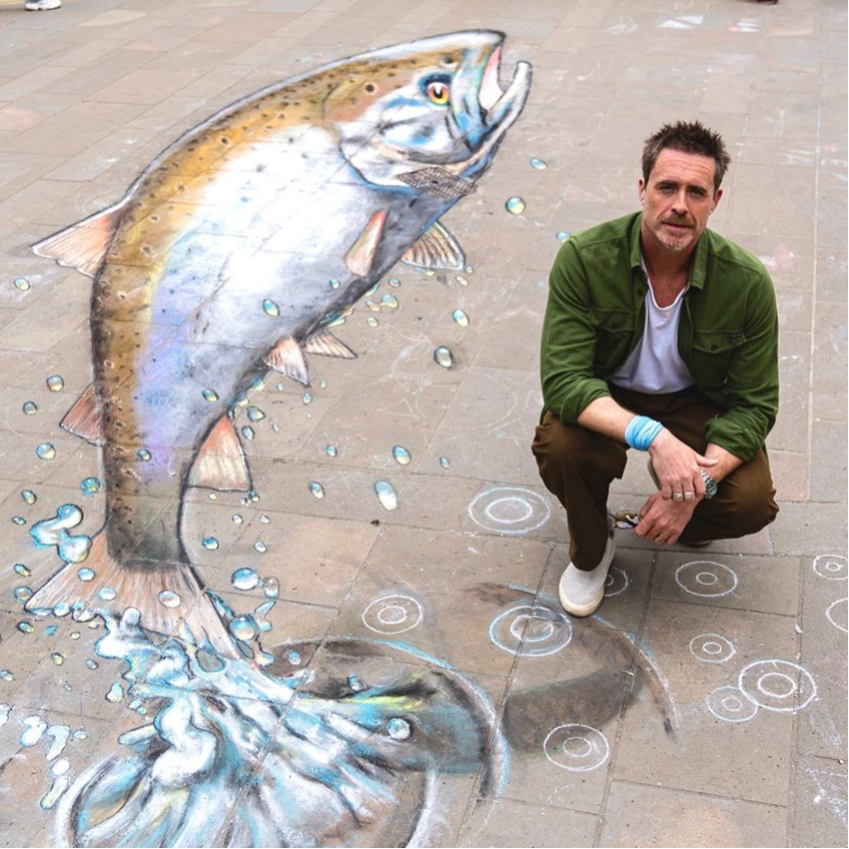
What image does a salmon conjure in your mind?
How do we persuade people to fall in love with fish — those silver, slippery creatures from an underwater world we barely notice? Don’t just look at water; look into it. Every river, every bridge, every footpath is an invitation to pause and peer beneath the surface. There is another world there, struggle, and mystery. And yet, some will still shrug and say: “But it’s only a fish.”
We measure fish in tonnes, not individuals, yet we count cattle by heads, the same with sheep, and pigs. They all have heads, even fish have heads, but we measure them by weight – a crude biomass, just a commodity to be exploited, a factory thing.
Now we love animals, but in our emotional hierarchy, we struggle to count fish as animals. They occupy the neglected corner. “Did you know lobsters are sentient beings?” The awkward box. No fur to stroke, no feathers to admire, no arms to hold, no pretend smiles, and no anthropomorphic watchful pools for eyes to invite empathy. Inscrutable aliens, they are dammed.
Storytelling with art and literature
The recently turned centurion David Attenborough revealed his top ten favourite books of all time, and one title immediately caught my eye: ‘Wild Animals I Have Known’ by Ernest Thompson Seton. Partly, I confess, because it is the only one we happen to share on our shelves. But more than that, because of what Attenborough said about it:
“Ernest Thompson Seton was a ranger on the Canadian Prairie and a very competent artist. He drew lots of illustrations of these animals that he knew and there were also – along the outer margins of the text – there were footprints, so you could imagine yourself tracking these things. And the animals were personified to the extent that I could give you their names now.” -DA
You find yourself torn: urging the hungry ‘Lobo’, the wolf, to find a meal, while desperately hoping ‘Raggylug’, the cottontail rabbit, might somehow escape.
These animals remained true to their species, yet through the story, they became relatable to us. Ernest Thompson said of his characters: “ The fact that these stories are true is the reason why all are tragic. The life of a wild animal always has a tragic end.
This is why we respect animals, and we must tell their stories
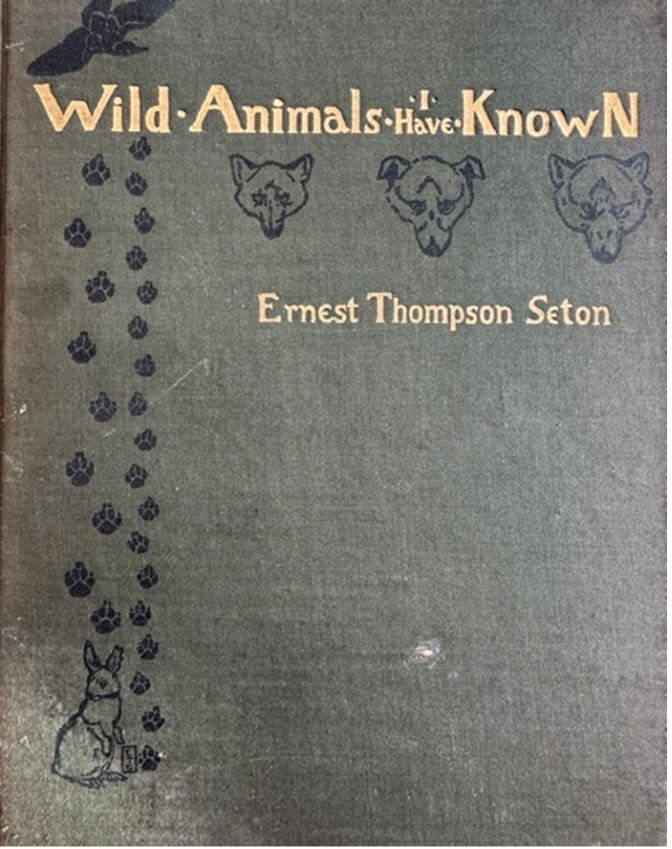
From Wild Animals I Have Known to Black Beauty, The Belstone Fox, and Tarka the Otter onwards, literature has long helped us bridge the divide between human and animal life. Which brings me, inevitably, to ‘Salar the Salmon’ — perhaps the only true great story of this kind centred upon a fish.
And maybe that matters more than we realise. Because until we can imagine the life of a fish — not as tonnage, stock, or commodity, but as an individual creature moving through a perilous and ancient world — we will continue to struggle to care whether rivers run through us, or like the salmon treat them as commodities.
Wild Atlantic salmon and farmed Atlantic salmon are different species, and as such, wild stocks cannot simply be restocked; they are a population of wild animals.
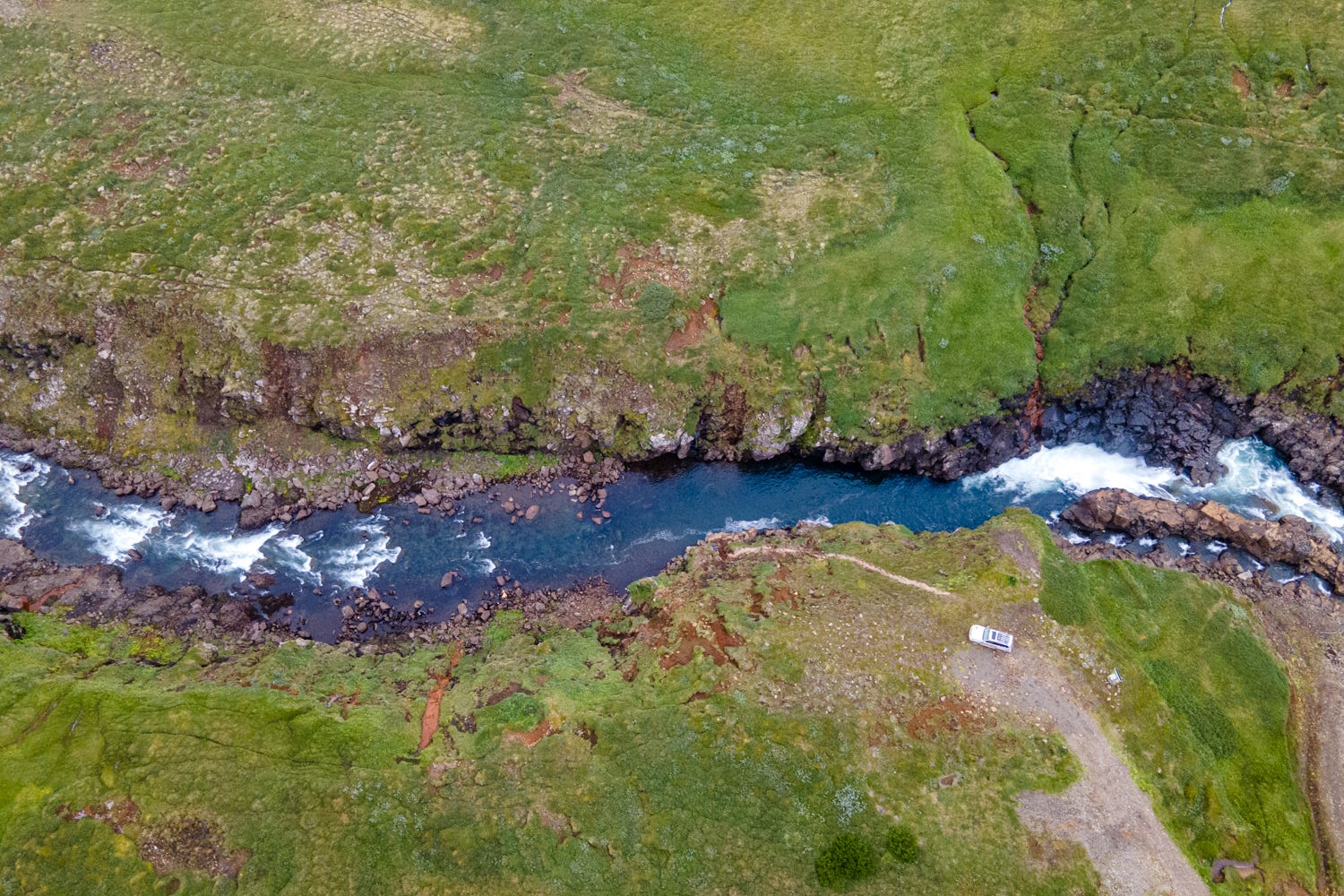
A salmon has no voice we can pretend to understand. Its world is cold, submerged, largely invisible. Yet its journey is no less epic: born in gravel, carried to sea, hunted from above and below, only to battle its way home against every stone and arrow we have hurled to block its path.
Perhaps that is what stories like Salar the Salmon achieve. They allow us, briefly, to enter the current alongside the fish itself — to see the river alive, upon which every hurt, every abstraction, every dam, and every pollution is a shared hurt.
…and that is why we were in Winchester early May to draw a salmon on the pavement. Not just any salmon, not a lifeless slab of farmed flab, sticking to a supermarket fridge, but a wild Chalkstream Atlantic salmon leaping out of the pavement, forcing the question? What is it? Why is it here?
Inspired by Project White Hart, and created to raise awareness for the few remaining chalkstream salmon of the River Itchen, which flows through the heart of Winchester, the organisations gathered to answer those questions included Jim Murray, the Actor, the Atlantic Salmon Trust, the Wessex Rivers Trust, and the Hampshire & Isle of Wight Wildlife Trust.
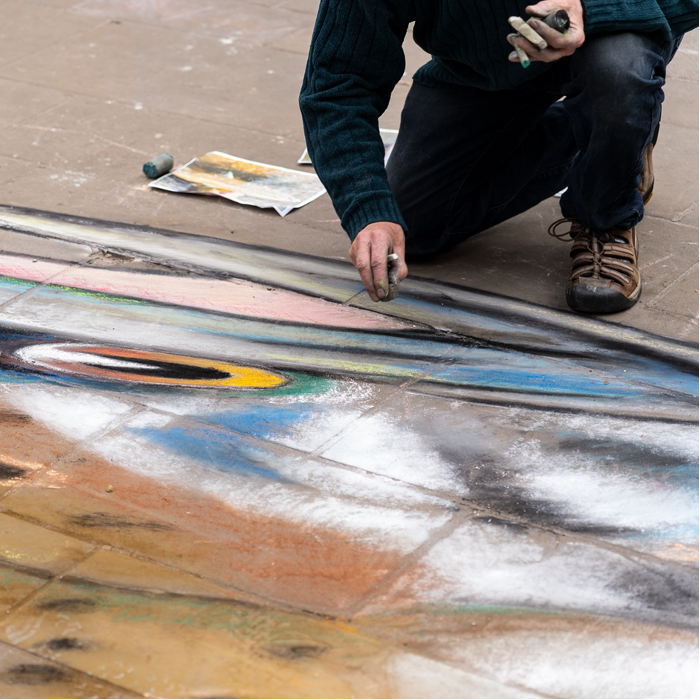
How pertinent is that? Drawn in chalk to represent salmon in the chalkstreams — a piece of legalised graffiti, a disappearing message. Then, right on cue at four o’clock, the rain arrived to wash it all away without a trace. Symbolism made visible.
And if we are not very careful — indeed, forceful in our support — that symbolism will become reality. This is why stories matter so much. Why naming matters, why literature matters, and storytellers
Place identity of Winchester
Winchester Cathedral, once among the richest religious houses in England, was founded by Benedictine monks who observed many fasting days when meat was forbidden. In that world, rivers, fisheries, and fishponds were not luxuries but essential and highly valuable assets. The monks controlled salmon weirs, eel traps, mills, and rights to river harvests along the River Itchen. Indeed, such was the importance of these waters that elements of this cultural heritage still echo in local bylaws and river customs today.
Fish — especially salmon — are not some modern conservation add-on to Winchester’s story; they are part of the town’s cultural and ecological identity, and so it felt entirely fitting that we stood just outside the cathedral grounds.
Written by John Miller