Project White Hart - Saving the salmon
how do we inspire people to care about the future of the wild Atlantic salmon?

There are around seven fish in English freshwaters currently classed as IUCN “threatened” — a global Red List classification. Of these, most people will only have heard of the Atlantic salmon and the European eel. Both are elusive, slippery, seldom seen. And so, as a nation of self-declared animal lovers, we gravitate instead toward the visible — the easily monetised: the colourful, the charismatic, the fluffy, the beautiful.
Which raises the question: how do we inspire people to care about the future of the wild Atlantic salmon? Without that support, these fish could vanish from England’s chalk streams within the next five years. Below. I highlight three key forces driving their decline—each of which will continue to accelerate this decline without greater public awareness and engagement.
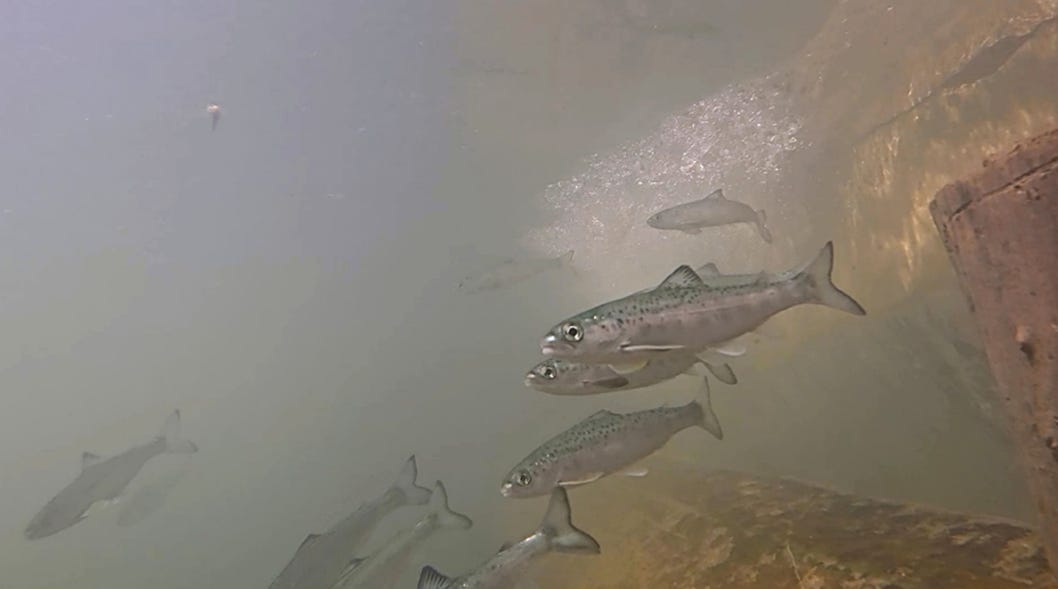
First, water quality — a catch-all that includes rising temperatures, abstraction, agricultural pollution, and human waste in our rivers. The inconvenient truth is that we have become addicted to cheap, abundant water, and the hidden cost is borne by the life within it. The problem is fiendishly complex. For conservation bodies – the likes of the Wildlife Trusts, Rivers Trust, and Atlantic Salmon Trust- the challenge of solving it involves the Environment Agency, Natural England, Water Companies, National Highways, Regional and local Councils, The Police, Farming, Riparian Owners, and many more — a fragmented web of responsibility where accountability is easily diluted.
We all share responsibility for this—and it begins with speaking up, engaging directly, and helping these bodies to hold themselves to account.
Second, open-net salmon farming. These operations create a hostile gauntlet, a barrier of sea lice through which young wild salmon and sea trout smolts must pass on their journey to sea. Beneath the cages, the seabed is often a dead zone, devoid of life. The inconvenient truth here is simple: we have embraced a cheap, convenient source of salmon protein, and chosen not to look too closely at its consequences. We are up against a multi-billion-pound, rapidly growing industry — not a marginal activity, but a powerful economic force. And while open-net salmon farming is not currently viewed as a major issue for salmon from Southern England, it creates a paradox in people’s heads.
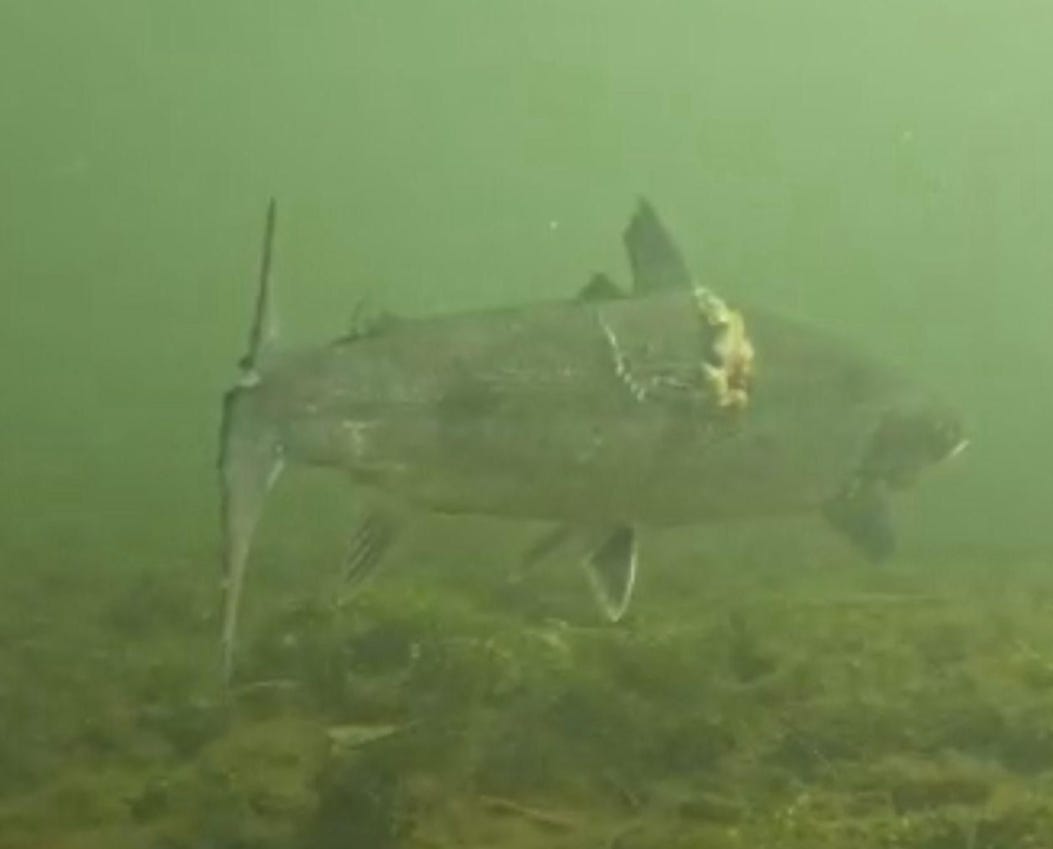
It is worth expanding on this problem, since I cannot think of any other farming practice that would be allowed to continue operating under these challenges, before we even mention the thousands upon thousands of farmed salmon that die in the cages from disease.
Swimming past open-net salmon cages in the estuaries of their home rivers, migrating smolts may be forced to navigate dense clouds of minute sea lice the size of a pinhead. Fuelled by the thousands of farmed salmon packed unnaturally into cages, the lice multiply explosively, forming a living barrier across the smolts’ path to the sea. These infestations are like an animal becoming infested with fleas. Once infested, these parasites continue to grow, even as the smolts swim away from the cages, and can have a critical impact.
Sea lice attach to the skin, fins, and gills of smolts feeding on mucus, skin, and blood. As they rasp through the smolts’ soft flesh, they strip away the protective mucus layer, leaving open wounds that make the fish vulnerable to secondary infections. Even moderate parasite loads can be fatal, as the infestations trigger intense stress responses that weaken growth, swimming ability, and overall condition.
So, what is the difference between a Farmed Atlantic Salmon (the one on your supermarket shelves, restaurants, and in your sandwiches) and a Wild Atlantic Salmon?
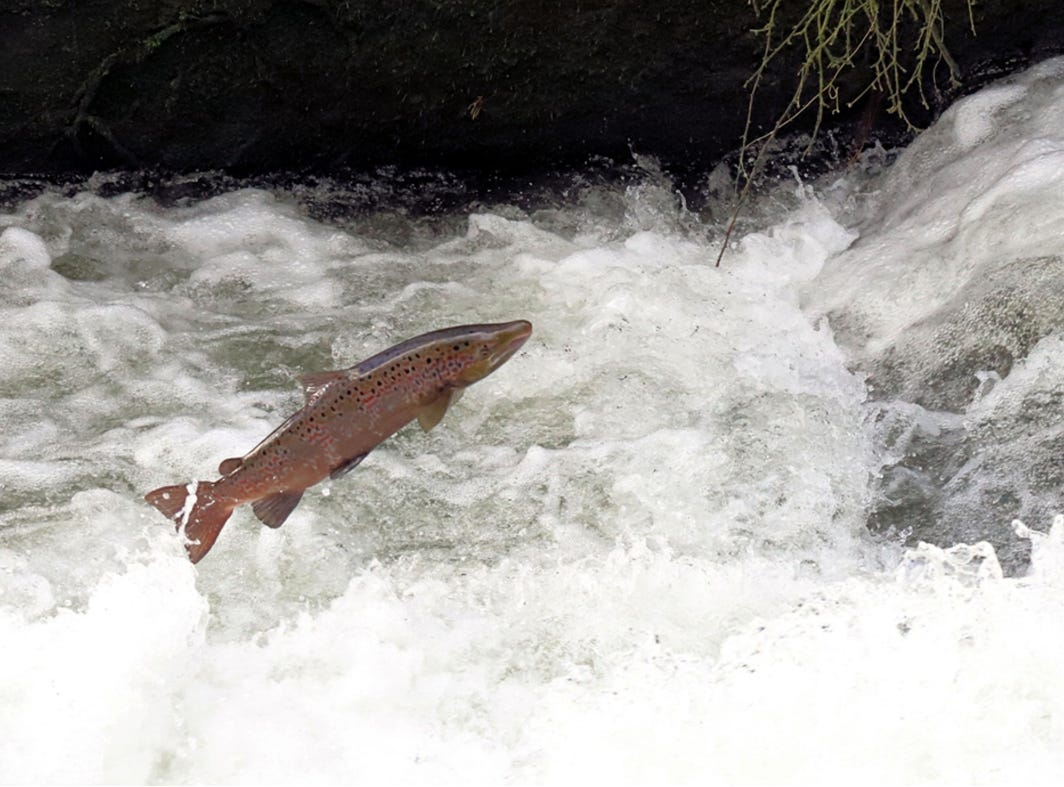
Farmed salmon:
These fish are bred over many generations by aquaculture companies to emphasise traits useful for production—fast growth, disease resistance, and uniform size. This selective breeding reduces genetic diversity, creating fish that are more genetically similar to each other. Many farm strains originate from a mix of regional stocks, so they are not locally adapted to any one river.
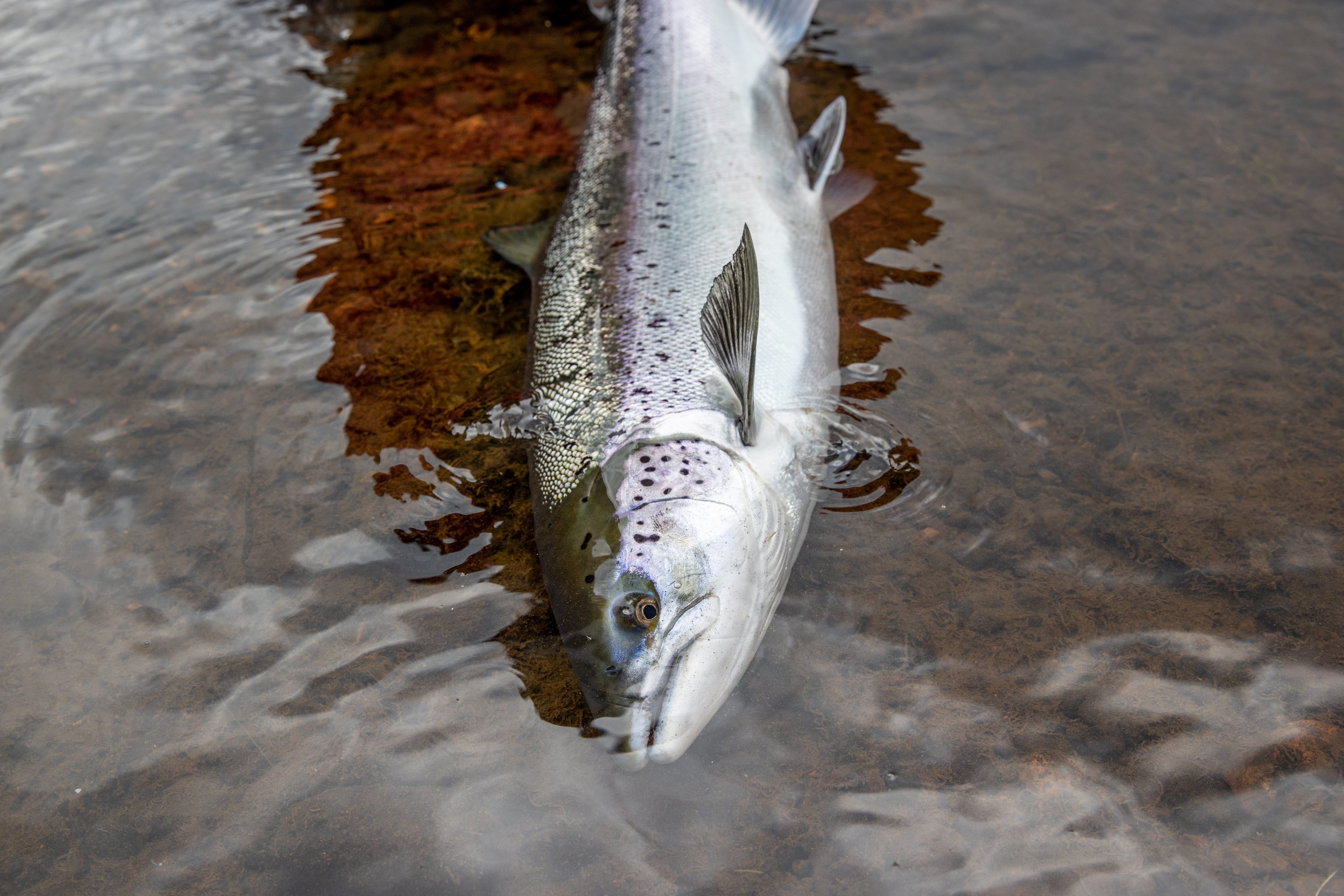
Wild Atlantic Salmon:
Wild populations are shaped by natural selection over thousands of years. Each river system—such as the River Spey or River Tweed in Scotland—has salmon with distinct genetic signatures, finely tuned to local conditions, including water flow, temperature, migration distance, and spawning timing. This results in high genetic diversity and, therefore, resilience both within and between rivers.
Why this matters:
When farmed salmon escape and breed with wild fish, their genetic contributions can dilute local adaptations. The offspring often show reduced survival in the wild, as they may inherit traits suited to farming conditions rather than the challenges of rivers and the ocean.
We all share responsibility for this—and it begins with not eating farmed salmon. Besides, there are questions about whether it is good for our own health.
A third point is perhaps the most troubling. We have become so disconnected from nature that the welfare of a fish barely registers in our cultural conscience. Wild salmon have slipped into irrelevance, made even more invisible by the illusion of abundance created by farmed fish in our supermarkets and restaurants (see point 2 above). More fundamentally, we no longer teach our children to understand or value the natural world, our natural capital. If that connection is not formed early, why would they grow up to care?
We all share responsibility for this, and at its foundation is the education of our children. For a start, you can push the Department for Education to adopt the GCSE for Natural History.
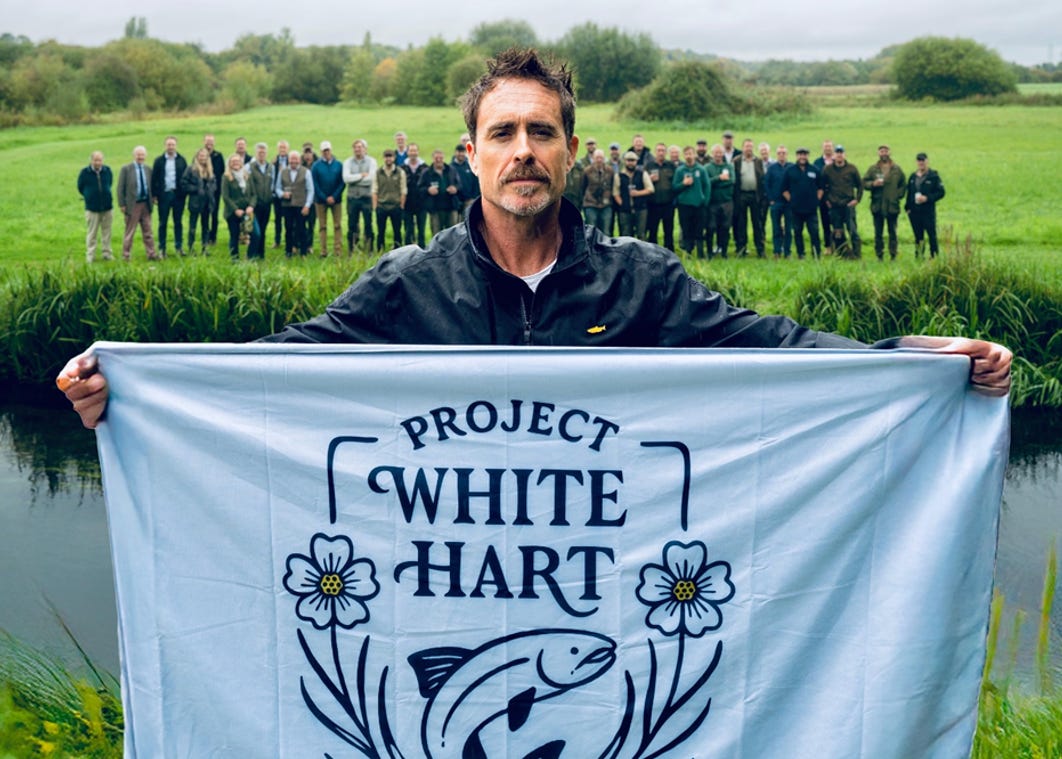
And all of this is before we even mention the challenges at sea — the salmon’s epic migration to the Arctic and back against all the odds, in a changing world. Personally, I love these creatures – they are not slippery, every single one is a mystical silvery magnificence.
So let me enlighten you about a project intended to halt this decline: for the chalk stream salmon in Hampshire, still here through geology alone. Everywhere we go is shaped by geology—what we eat, the plants and animals around us, and even why global trade sends ships and planes across the world. While we attempt to tame these forces, in many ways, they are ultimately too powerful; fish have no such influence; they must live with the flow and the consequences. That is the difference between fish and man.
Millions of years ago, during the Cretaceous, a warm, shallow sea covered what is now Southern England. In these waters, microscopic algae (plankton) formed from tiny, eggshell-like plates. When they died, these plates sank to the sea floor, forming layers that were eventually compressed into rock. Later movements lifted this rock above sea level, creating the hills we see today. This rock, called chalk, contains millions of tiny holes between the shells, making it highly porous and able to absorb water like a sponge.
Around 27,000 years ago, near the end of the last Ice Age, this natural ‘sponge’ began forming the first chalk streams—giving rise to the cold, clean waters where Atlantic salmon would thrive. Most of Britain was still under ice, but in Southern England, the summer thaw sent broad, shallow streams flowing across what is now Hampshire, before each winter everything was locked once more in ice.
Further warming 12,000 years ago carved the valleys of the Avon, Test, and Itchen rivers, which joined the great river system of the time, the Rhine, flowing west into the Atlantic near Brittany. Then, around 8,000 years ago, rising sea levels flooded the lowlands, forming the English Channel and cutting Britain off from continental Europe—we became an island.
And somewhere in those shifting waters, the first Atlantic salmon nosed its way into what we now call a chalk stream.
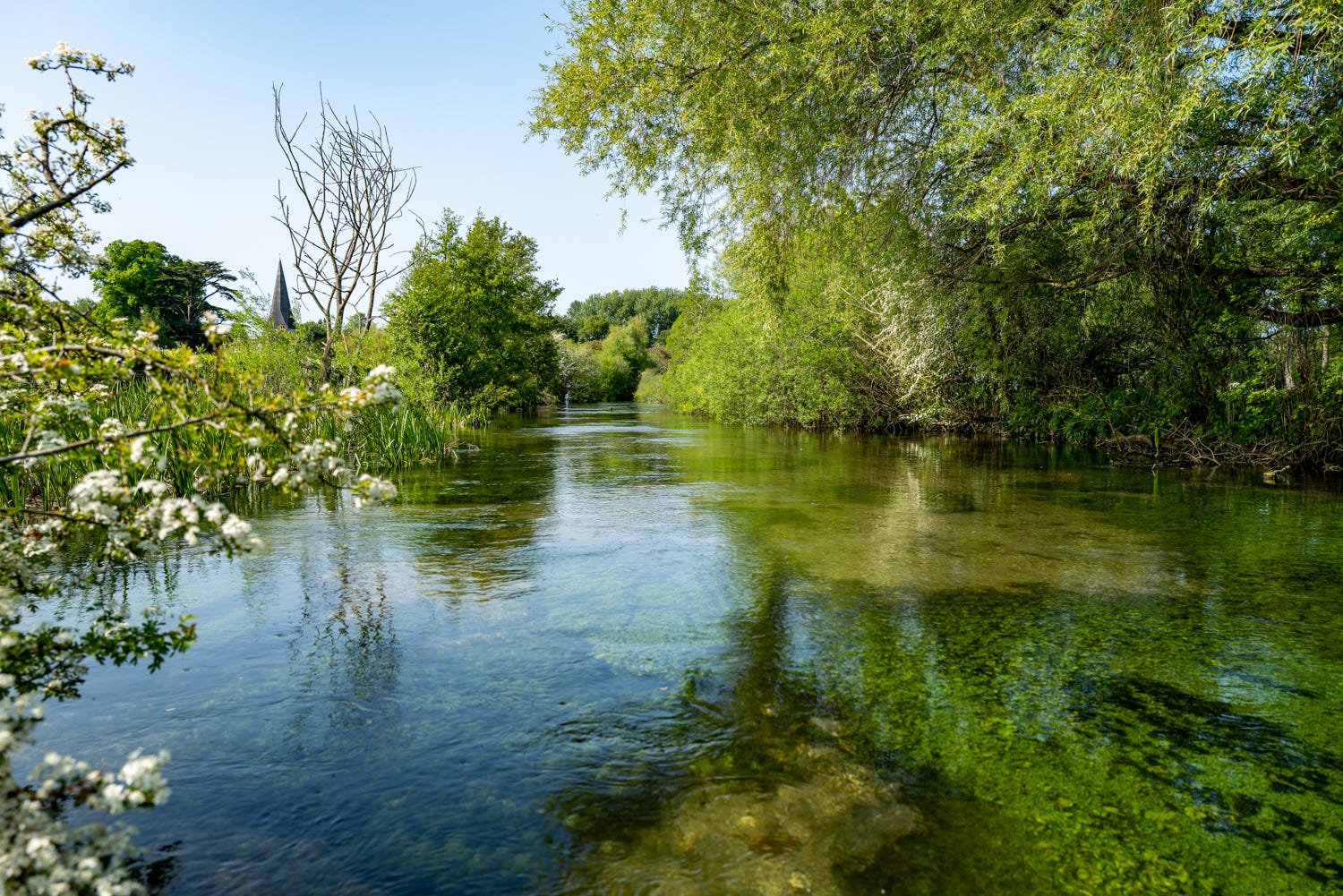
For over 12,000 years, they thrived, but in just over a century, we have reduced these fish to the brink of extinction — an irreversible point of no return. This is what Project White Hart is about: saving these fish for future generations in the cool aquifer-fed streams they love. There will be naysayers and doom merchants, people who say this is too hard and that it has all been tried before. We just have to work harder and smarter. Let it be a blueprint for collaboration, a coalition of the willing.
As noted earlier, one of the key challenges is to engage the wider community and to restore the wild Atlantic salmon to local cultural relevance by rebuilding connections across the Hampshire landscape.
To this point, and in advance of future activities on the ground, within the Test and Itchen catchments, Project White Hart will host a public art installation in central Winchester, outside the City Museum. Over the May Bank Holiday weekend (Saturday 2 May to Monday 4 May), a striking three-dimensional chalk salmon will appear to leap from the pavement.
The installation is designed to spark curiosity, encourage interaction, and open conversation about the presence and importance of wild chalk-stream salmon, while marking the launch of the new Project White Hart website.
Local press will be invited, and visitors will be encouraged to share the installation on social media, explore the website, and sign up for future updates.
Please come along and meet people who are knowledgeable and care about this mystical silvery magnificence that still somehow clings to survival, in our cool, precious chalkstreams.
Written by John Miller